Fort Worth’s Jacksboro Highway in the 1940s & 1950s
by Ann Arnold
232 Pages
Eakin Publications (1998)
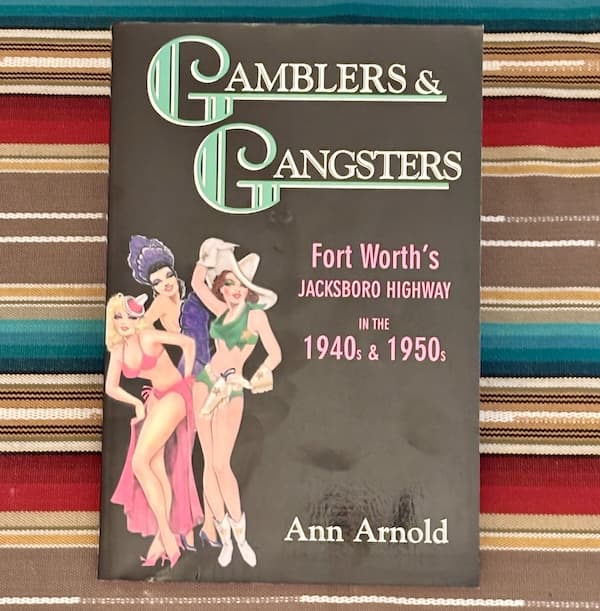
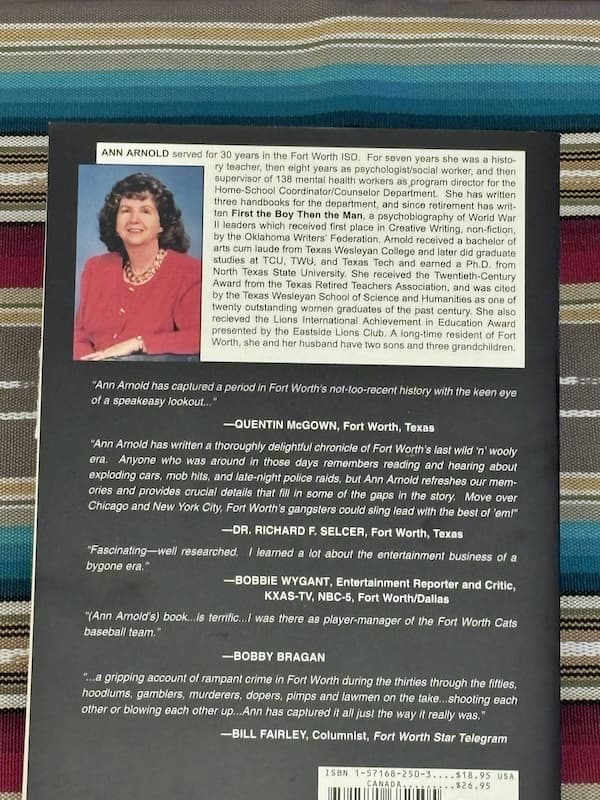
Ann Arnold’s Gamblers & Gangsters – Fort Worth’s Jacksboro Highway in the 1940’s and 1950’s runs through the lives and fates of many shady characters who made-up Fort Worth’s gangster underworld. The gangster underworld? Yes, for many years Fort Worth was refered to as “Little Chicago.” Readers of this book will quickly undertstand the term was well-deserved.
Arnold begins her story with the sudden car-bombing of gambler Nelson Harris and his pregnant wife, Juanita on Nov. 22, 1950. The case, which was never solved, brought to public attention the crime and corruption which had turned Fort Worth from Cowtown to “Little Chicago.” Citizens and the city council became frustrated with the law’s inability to deal with the situation. Any indictments or arrests made would be mysteriously plea bargained down to misdemeanor fines, or never prosecuted. The police chief and vice squad would insist they never found evidence of gambling.
Yet, at the same time reporters for the Dallas Morning News would walk into the gambling clubs on Jacksboro Highway, play with their own cash, and write newspaper stories lauding the city with details of wide-spread open gambling.
The Roaring 20’s
Some of the gambling parlors began in the 1920’s as speak-easies. Clubs like Top Of The Hill in Arlington or the 2222 Club or the 3939 Club in Fort Worth were constructed with hidden rooms, guard shacks and secret passageways. The large amount of gambling produced wide-spread graft and police corruption. All the law officials were paid-off regularly.
Gambling also creates large amounts of cash. The cash had to have extra protection from guys carrying guns. This atmosphere produced gangsters who ran rackets, operated bars and killed each other over arguments. Arnold tells stories of people ultimately found decomposing in shallow graves near Lake Worth.
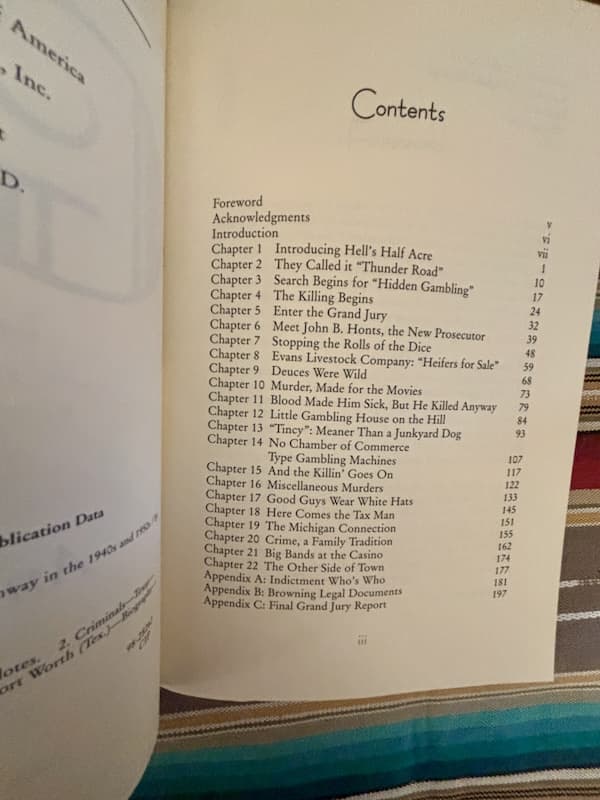
Arnold details the history and fates of Tincy Eggleston, Cecil Green, Herbert Noble and Jim Thomas. “Except for their particular area of crime, (these gangsters) were law-abiding citizens.” Many of the gangsters did not go to prison, but instead were killed by other gangsters.
Arnold writes, “People not involved in entertainment or gambling rarely encountered the underworld. They had no reason to be fearful. The first many neighbors knew of the double lives of men killed in gangland slayings was when they read about it in the newspapers.” Apparantly we do not want to give the impression that Fort Worth was a wild lawless town like Chicago in the 1930’s.
Arnold’s book interested me because I grew-up in the Fort Worth area, and I enjoyed reading about many of the lives and times of Cowtown fifty years ago. The book contains many interesting details and facts about the city, the entertainment industry and people of the time. It also contains lots of photographs as well. Beyond those familiar with Fort Worth, readers everywhere should enjoy the wild and wooly stories of the gamblers and gangsters from that bygone era.